
Why in the news?
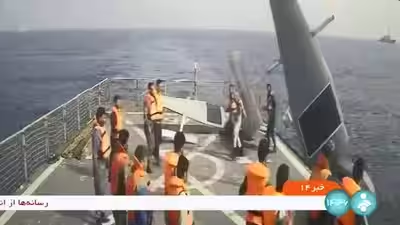
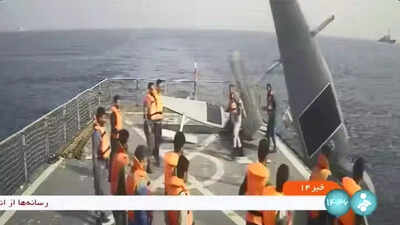
West Asia is witnessing another sharp rise in tensions after reports suggest Iran has told Yemen’s Houthi rebels to stand ready to disrupt shipping in the Red Sea if the United States targets Iran’s electricity infrastructure. According to a Reuters report citing multiple sources, the Houthis have deployed missiles and drones near the Bab el-Mandeb Strait and are awaiting orders.The development takes on greater significance because Iran has already closed the Strait of Hormuz following the recent escalation of its conflict with Israel and the United States. With a substantial portion of Gulf oil being diverted through Saudi Arabia’s Red Sea pipeline to the port of Yanbu, any disruption in the Red Sea could affect one of the world’s last major energy corridors.Security analysts have warned that if the conflict spreads to the Red Sea, it could trigger another global maritime and energy crisis, similar to disruptions witnessed during the Gaza conflict when several shipping companies avoided the route.
The concept in simple terms
The Red Sea is one of the most important waterways in the world. It is located between North-Eastern Africa and the Arabian Peninsula and connects Europe with Asia through the Suez Canal.For centuries, it has been one of the busiest trade routes in the world. Every day, thousands of ships carrying crude oil, liquefied natural gas (LNG), food grains, manufactured goods and consumer products pass through the Red Sea.The southern entrance to the Red Sea is the Strait of Bab el-Mandeb, a narrow passage between Yemen on one side and Djibouti and Eritrea on the other. Ships entering or leaving the Red Sea must pass through this strait.The northern end of the Red Sea connects to the Mediterranean Sea through the Suez Canal in Egypt. Together, the Bab el-Mandeb Strait and the Suez Canal form one of the shortest sea routes linking Asia and Europe.If this route is blocked, ships must round the Cape of Good Hope at the southern tip of Africa. This alternative route is much longer, increases fuel costs, delays cargo deliveries and increases worldwide shipping costs.
how it works
The Red Sea as a global trade corridor. The Red Sea is an essential link in global maritime trade. Its strategic importance comes from three main factors:1. Energy transportA significant part of the world’s oil and natural gas passes through this route. After Iran closed the Strait of Hormuz, Saudi Arabia diverted a large portion of its crude exports through pipelines leading to the Red Sea port of Yanbu. Reports suggest that the Red Sea now carries almost 7% of the world’s energy supply.If transport through the Red Sea is disrupted, oil exports from Saudi Arabia and other Gulf countries could be severely affected.2. International shippingThe Red Sea is one of the busiest trade routes. Container ships transporting electronics, automobiles, machinery, food products and consumer goods between Europe and Asia rely heavily on this route.During previous Houthi attacks on commercial ships in 2023-24, many shipping companies diverted ships across Africa. The longer journey increased transport costs and caused delays in global supply chains.3. Strategic military importanceThe Red Sea is equally important from a security point of view. Several countries, including the United States, France, China and Japan, maintain military installations near the region to protect maritime trade.Control of the Bab el-Mandeb Strait provides significant strategic leverage because even small attacks on merchant ships can disrupt global shipping.Analysts note that the narrow nature of the strait makes it vulnerable. Even limited attacks by drones, missiles or small boats can force shipping companies to temporarily suspend operations.
Why is the last notice important?
The Strait of Hormuz has traditionally handled around a fifth of the world’s oil supply. After its closure, Saudi Arabia shifted a large part of its exports to the Red Sea route.If the Bab el-Mandeb Strait is also disrupted, the Middle East’s two main oil export corridors will face simultaneous pressure.Such a situation could:
- Increase world crude oil prices
- Increases transport and insurance costs
- Delay international trade
- Triggers inflation in many countries
- to affect
energy security around the world
Important institutions, laws or treaties
Suez Canal Authority (SCA)It manages and regulates traffic through the Suez Canal, one of the busiest maritime routes in the world.United Nations Convention on the Law of the Sea (UNCLOS)It provides the legal framework governing international navigation, maritime boundaries and freedom of navigation through international waters and strategic straits.Combined Maritime Forces (CMF)A multinational naval association that carries out maritime security operations in the Red Sea, Gulf of Aden and nearby waters.Operation Prosperity GuardianA US-led multinational initiative to protect commercial shipping in the Red Sea from attack.
English from India
The Red Sea is strategically important to India because a large part of India’s trade with Europe, North Africa and parts of North America passes through the Suez Canal.Any disruption in the Red Sea can have multiple consequences for India:
- Rising crude oil prices may increase India’s import bill.
- Transport and insurance costs for exporters and importers could increase.
- Delivery of goods to Europe may be delayed.
- Inflationary pressures could increase if shipping costs remain high.
- Indian naval deployments may increase to protect merchant vessels operating in the region.
India has previously deployed naval vessels in the Gulf of Aden and the Red Sea to protect commercial shipping against piracy and threats to regional security.
Preliminary data box
Main practice questions“The Red Sea has become one of the most strategically important maritime regions in the world.” Discuss its importance for global energy security and analyze the implications of ongoing geopolitical tensions for India. (250 words)
MCQs for practice
1. The Strait of Bab el-Mandeb connects:A. Mediterranean Sea and Black SeaB. Red Sea and Gulf of AdenC. Persian Gulf and Arabian SeaD. Arabian Sea and Bay of BengalAnswer: B2. Which international waterway connects the Red Sea with the Mediterranean Sea?A. Panama CanalB. Kiel CanalC. Suez CanalD. Bosporus StraitAnswer: C3. The Red Sea is strategically important mainly because:A. It contains the largest fresh water reserves in the worldB. It connects Europe and Asia by one of the shortest sea routesC. Produces the largest amount of crude oilD. Separates Europe from North AmericaAnswer: B4. The Houthis are mainly based on:A. IraqB. SyriaC. YemenD. LebanonAnswer: C5. UNCLOS is mainly concerned with:A. International trade ratesB. Maritime law and use of the oceansC. Nuclear non-proliferationD. Aviation securityAnswer: BFive key terms to remember
- Red Sea: A vital international sea route connecting Europe and Asia.
- Bab el-Mandeb Strait: The southern gateway to the Red Sea and one of the world’s key maritime choke points.
- Suez Canal: A canal in Egypt that connects the Red Sea with the Mediterranean Sea.
- Strait of Hormuz: The world’s most important oil traffic absorption point connecting the Persian Gulf with the Gulf of Oman.
- Axis of Resistance: A network of Iranian-backed armed groups operating in West Asia, including the Houthis, Hezbollah, and various Iraqi militias.