

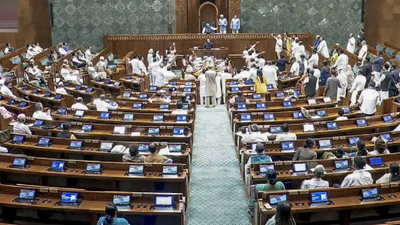
After days of disruption in Parliament and an intense political battle over recurring leaks of exam papers, the Lok Sabha has passed the Public Examination Amendment (Prevention of Unfair Means) Bill, 2026, legislation aimed at toughening India’s law against paper leaks.The bill was debated amid heated exchanges between the government and the opposition, with the latter supporting student protests over recent exam controversies and questioning the handling of the demonstrations. Meanwhile, the government argued that paper leaks have occurred under governments of different political parties and urged lawmakers not to view the issue through a political lens. He maintained that the amendments are only aimed at strengthening the integrity of public examinations and protecting the interests of millions of students.The proposed legislation introduces faster investigations, dedicated fast-track courts and significantly tougher penalties for those involved in leaking exam papers. But what exactly does the bill seek to change and why has the government decided to amend the existing law? Here’s a detailed look.
Why was the bill amended?
India introduced the Public Examination (Prevention of Unfair Means) Act, 2024 to criminalize paper leaks and other unfair practices in public examinations. However, repeated controversies related to recruitment and entrance exams, including the NEET paper leak case, led to a growing demand for stricter enforcement and swifter legal action against offenders.According to the Centre, the amendments are based on the government’s experience in implementing the 2024 Act and are aimed at plugging loopholes in the existing framework.While presenting the Bill in Parliament, Union Minister Jitendra Singh said the government had brought the amendments in “an honest spirit” to further strengthen the examination system. He urged members not to politicize the issue, arguing that paper leaks have occurred under governments led by different political parties and that the focus should remain on protecting students.
What are the main changes in the Bill against paper leaks ?
The amendment introduces several significant provisions aimed at speeding up prosecution and harsher punishment.Fast-track trials for paper leak casesOne of the most important changes is the proposal to establish dedicated fast track courts in each state. These courts will exclusively hear cases related to paper leaks and examination malpractice, reducing the delays that often occur in regular criminal proceedings.Time-limited investigationsThe bill proposes that investigations into paper leak cases must be completed within two months. The goal is to ensure faster filing of charges and faster trials so that justice is not delayed.Harder punishmentThe amended legislation substantially increases the penalties for those found guilty of leaking exam papers. Convicted individuals could face: Imprisonment of up to 10 years and fines of up to ₹50 lakh. The government believes that tougher punishment will act as a stronger deterrent against organized cheating.Serious penalties for organized unionsThe amendments also target criminal networks that operate large-scale paper leakage rackets. Organized paper leak syndicates can face fines of up to Rs 10 crore, reflecting the government’s focus on dismantling organized exam fraud rather than just punishing individual offenders.
What did the government say?
While defending the bill in Parliament, Union Minister Jitendra Singh said the Center acted swiftly after the NEET paper leak case and remains committed to protecting the integrity of public examinations.He argued that the proposed amendments demonstrate the government’s willingness to learn from experience and continuously strengthen the legal framework against examination malpractice.Citing official figures, Singh informed the House that 52 FIRs have been registered since the anti-paper leakage law came into force in 2024. He also said that the number of suicides related to paper leak incidents has decreased in recent years, which he described as an encouraging sign of the law’s impact.
Why is the bill important?
Paper leakage has become one of the biggest challenges facing the examination system in India. Recruitment tests and entrance exams often involve thousands of candidates, and any compromise in their integrity can affect careers, delay recruitment and undermine public confidence.Repeated controversies over exam irregularities have sparked widespread protests, legal battles and demands for systemic reforms.By proposing faster investigations, specialized courts and tougher punishments, the government hopes to improve enforcement and discourage organized paper-leaking operations.
Does the bill eliminate paper leaks?
While the amendments strengthen the legal framework, experts note that the legislation alone may not completely eliminate exam malpractice.Preventing paper leaks also requires stronger digital security, better monitoring of printing and distribution systems, better coordination between investigative agencies, and strict accountability of officials involved in conducting examinations.The effectiveness of the amended law will ultimately depend on how effectively it is implemented and whether investigations and prosecutions are carried out within the proposed timeframes.
The bottom line
The Public Examination Amendment (Prevention of Unfair Means) Bill, 2026 represents the Centre’s latest effort to restore confidence in India’s public examination system. By introducing fast-track courts, conducting time-limited investigations and increasing penalties for criminals and organized syndicates, the legislation seeks to make paper-leaking crimes harder to commit and quicker to prosecute.For millions of students preparing for exams, the law’s success will ultimately be measured not by the severity of its provisions, but by its ability to ensure that examinations are fair, transparent and free of malpractice.