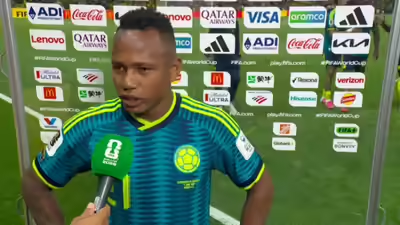
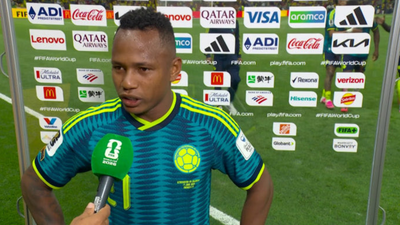
Jáminton Campaz has reportedly not returned to Colombia with the national team following them FIFA World Cup elimination, as new reports say the forward is staying behind as a precaution after receiving death threats following the loss to Switzerland. The development comes just one day after the Colombian Football Federation (FCF) publicly condemned the abuse directed at Campaz and his family, while urging authorities to investigate those responsible.Colombia’s World Cup campaign came to a sad end on Tuesday after a penalty shootout loss to Switzerland in the Round of 16. Campaz, who plays his club football for Argentine side Rosario Central, endured one of the game’s most brutal moments when he missed a golden opportunity to win the game in the closing stages of extra time.
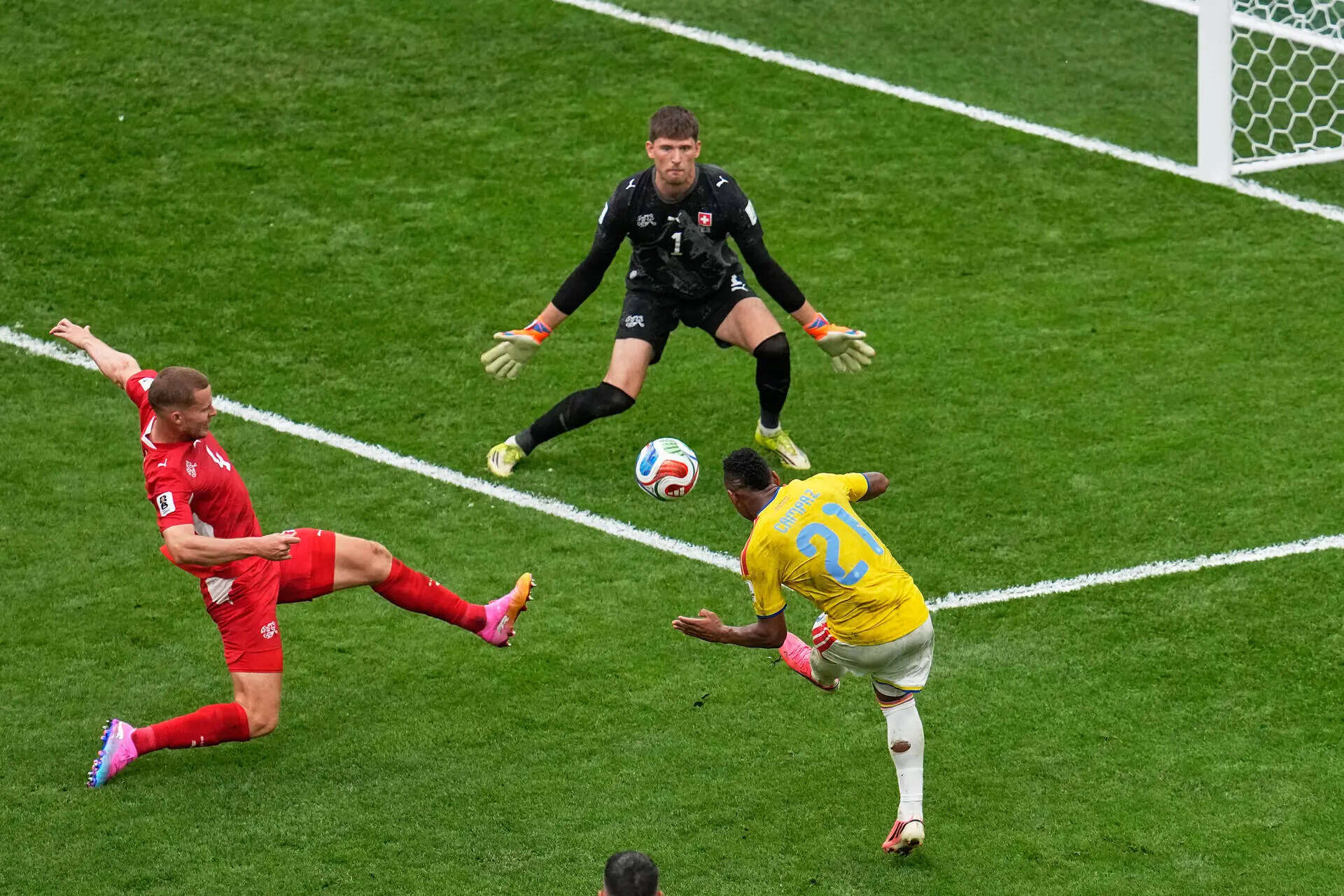
Jaminton Campaz (21) of Colombia misses a shot on goal as Switzerland goalkeeper Gregor Kobel (1) defends during a World Cup round of 16 soccer match in Vancouver, British Columbia, Tuesday, July 7, 2026. (AP Photo/Gregory Bull)
With less than six minutes remaining, the 26-year-old fired his effort over the crossbar with the score still locked at 0-0. Although he recovered to convert his penalty in the ensuing shootout, Colombia eventually lost 4–3 and exited the tournament.According to: Argentine outlet Infobae:Campaz did not board the Colombian squad’s return trip from Vancouver to Bogotá on Thursday because of concerns for his safety after a wave of online abuse and death threats.Several senior players, including James Rodríguez, Davinson Sánchez and Juan Fernando Quintero, are among those returning home with the rest of the squad. Campaz, however, was reportedly not on the flight. It remains unclear whether he remained in the United States or traveled separately to Argentina, where he was contracted to Rosario Central.
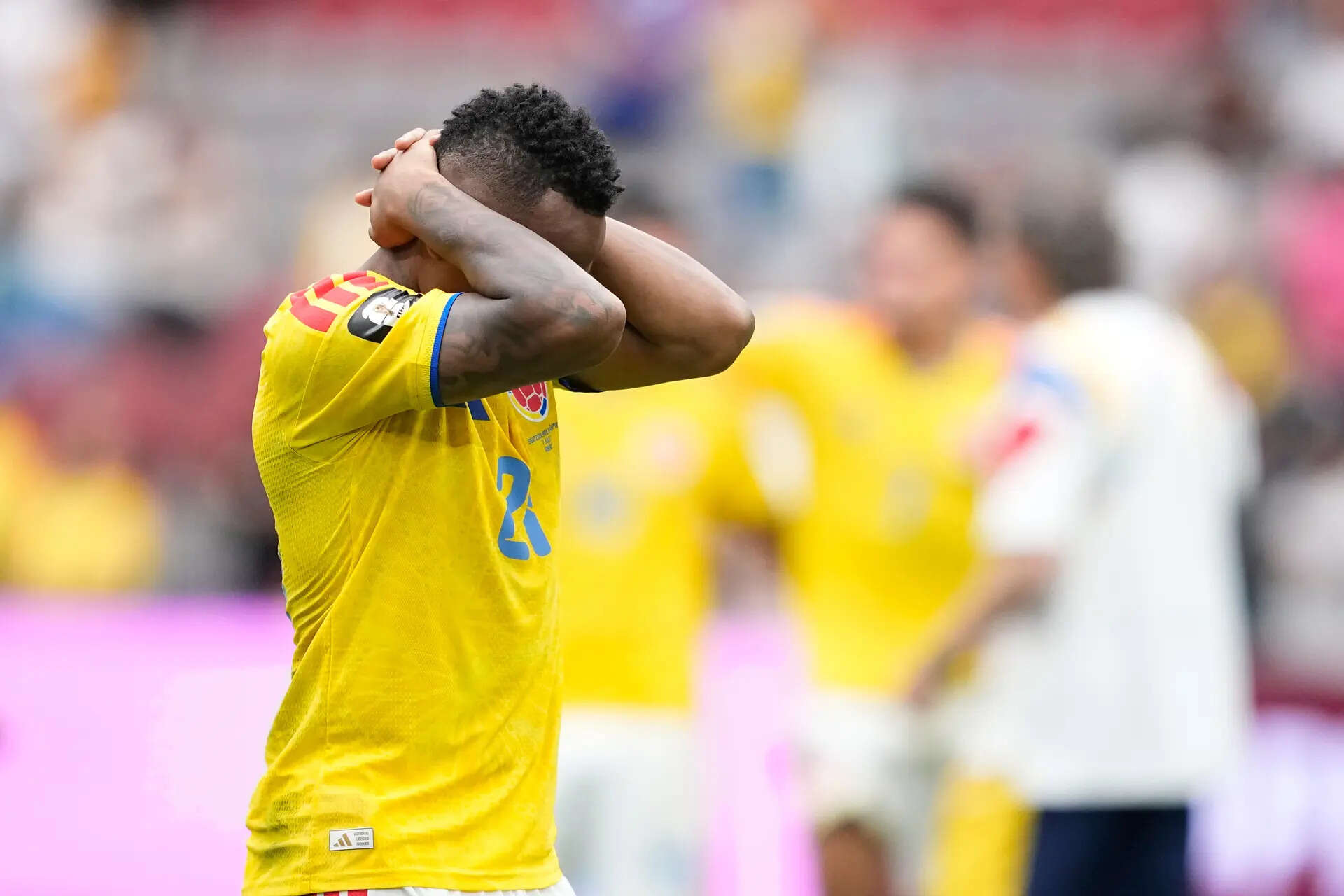
Colombia’s Jaminton Campaz reacts after losing to Switzerland during a penalty shootout in the World Cup round of 16 soccer match between Switzerland and Colombia in Vancouver, British Columbia, Tuesday, July 7, 2026. (AP Photo/Lindsey Wasson)
The reported decision follows days of continued harassment on social media following Colombia’s dismissal. Campaz later disabled comments on his accounts before posting an emotional message asking supporters not to let frustration turn into hate.“Football is also made up of difficult moments,” he wrote alongside a photo of himself covering his face in frustration.“My Colombia, please don’t forget to respect us. We may think differently or feel disappointment and sadness, but no love justifies hatred or living in fear.”Reflecting on the tournament, Campaz added that representing his country fulfilled a lifelong dream.“Since I was young, I dreamed of defending the colors of Colombia, listening to the anthem, representing millions of people, and scoring a goal in a World Cup. Now, I can only thank God for allowing me to fulfill that dream. These are the memories I will carry with me forever.“I want to sincerely thank everyone who stood with us during the World Cup – those who believed in us, cheered us until the last minute, and never lost faith. Thanks also to my family, who have been my strength every step of the way and have been by my side in the happiest and most difficult moments.”He also acknowledged the country’s disappointment after the Round of 16 exit.“To the whole country, I can only say that I share the pain of this elimination. We, too, dream of progressing further, and I know the sadness that we feel now as Colombians.“I am very sorry that I was not able to give you the happiness that we hoped for, but I want you to know that there is no lack of dedication, commitment, or love for this jersey. I gave everything I had on the pitch, and I would do it a thousand times for my country.The Colombian Football Federation responded on Friday by issuing a strong statement condemning the threats made against Campaz and those close to him, while calling on the country’s Attorney General’s Office to identify those responsible and prosecute them as soon as possible.“No athlete, or any member of their inner circle, should be intimidated for representing their country on a sporting field,” the federation said.“Football should be a space for unity, respect, and hope, not a place for hatred, intimidation or violence.”The episode will inevitably draw comparisons to one of the darkest moments in Colombian football history. During the 1994 FIFA World Cup in the United States, defender Andrés Escobar scored an own goal in Colombia’s loss to the hosts, a result that contributed to the team’s elimination. Just a few days after returning home, Escobar was killed outside a nightclub in Medellín, a tragedy that remains one of the most painful chapters in football.While there is no suggestion that Campaz faces a similar situation, reports that he has reportedly chosen not to return to Colombia immediately underscore the seriousness of the threats that follow the national team’s exit from the World Cup. The federation’s intervention and its request for a criminal investigation now puts the focus on identifying those responsible for the abuse rather than allowing the sport’s frustration to escalate into real-world intimidation.