NEW DELHI: The Goa Institute of Management (GIM) recently concluded a five-day Academic Leadership Program (ALP) for Heads of Colleges at Delhi University, bringing together academic leaders to discuss emerging challenges and opportunities in higher education.Held from June 29 to July 3, the program was attended by principals representing over 40 colleges of Delhi University, including Shri Ram College of Commerce (SRCC), Hindu College, Lady Shri Ram College for Women, Hans Raj College, Ramjas College, Shaheed Sukhdev College of Business Studies, Sri Venkateswara College and Lady Irwin College. Discussions focused on strengthening institutional leadership and preparing higher education institutions for evolving academic and administrative demands.Focus on leadership and institutional readinessThe program was designed to facilitate discussions on institutional planning, governance and strategies for building future-ready higher education institutions. The sessions were conducted by experts from GIM, Delhi University and National Institute of Educational Planning and Administration (NIEPA).Key topics covered during the program included the use of artificial intelligence in education, implementation of the National Education Policy (NEP) 2020, digital transformation, institutional governance, change management, inclusive leadership, financial management, ethics and learner-centred education.
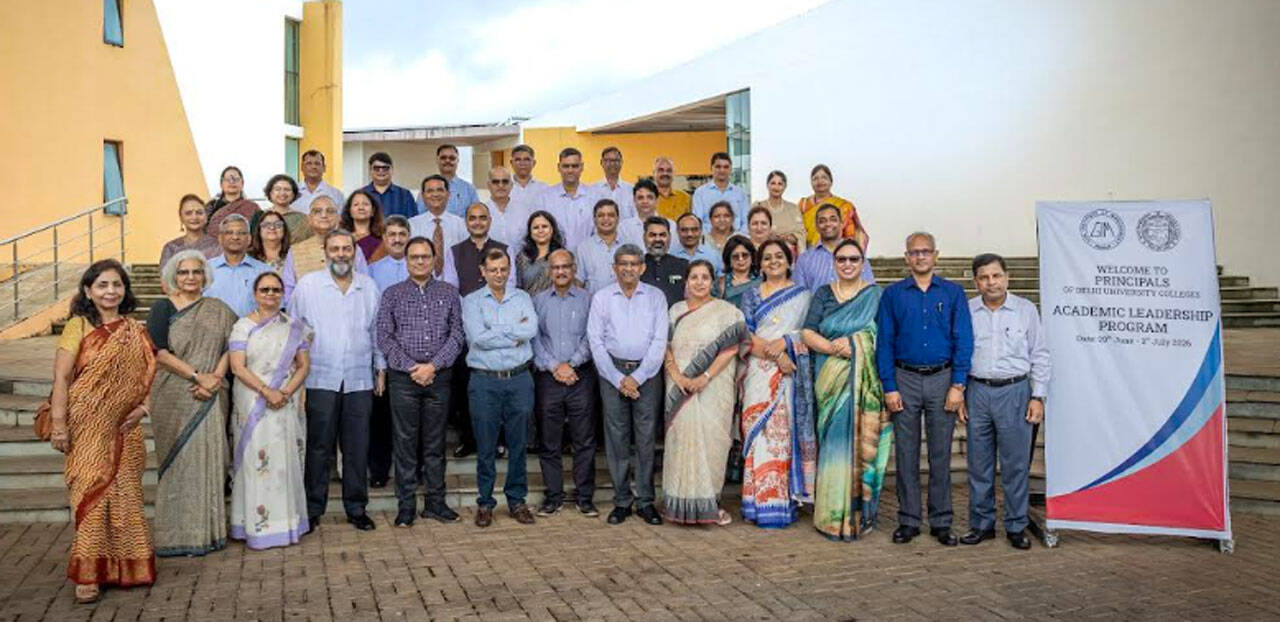
More than 40 principals from Delhi University attend the GIM program on the future of higher education
Addressing the participants, GIM Director Ajit Parulekar said institutions must continuously evolve to meet the changing learning needs of students while maintaining academic quality. He also stressed that higher education should focus on developing responsible citizens along with professional skills.Principals discuss common challengesOne of the key features of the program was a series of discussions between the participating principals on issues affecting institutions of higher education. These include decreasing student admissions and class attendance, the growing role of artificial intelligence in teaching and administration, improving graduate employability and securing funding for institutional infrastructure.Participants also shared experiences and practical approaches to addressing these challenges, with the program serving as a platform to share institutional best practices.Platform for collaborative learningAccording to GIM, the Academic Leadership Program aims to support capacity building among higher education leaders and foster collaborative learning on issues aligned with national educational priorities.The initiative comes at a time when higher education institutions across the country are adapting to changing policy frameworks, technological advances and evolving expectations about quality, innovation and global competitiveness.